The Process of Maiko Makeup -Cultural Introduction-
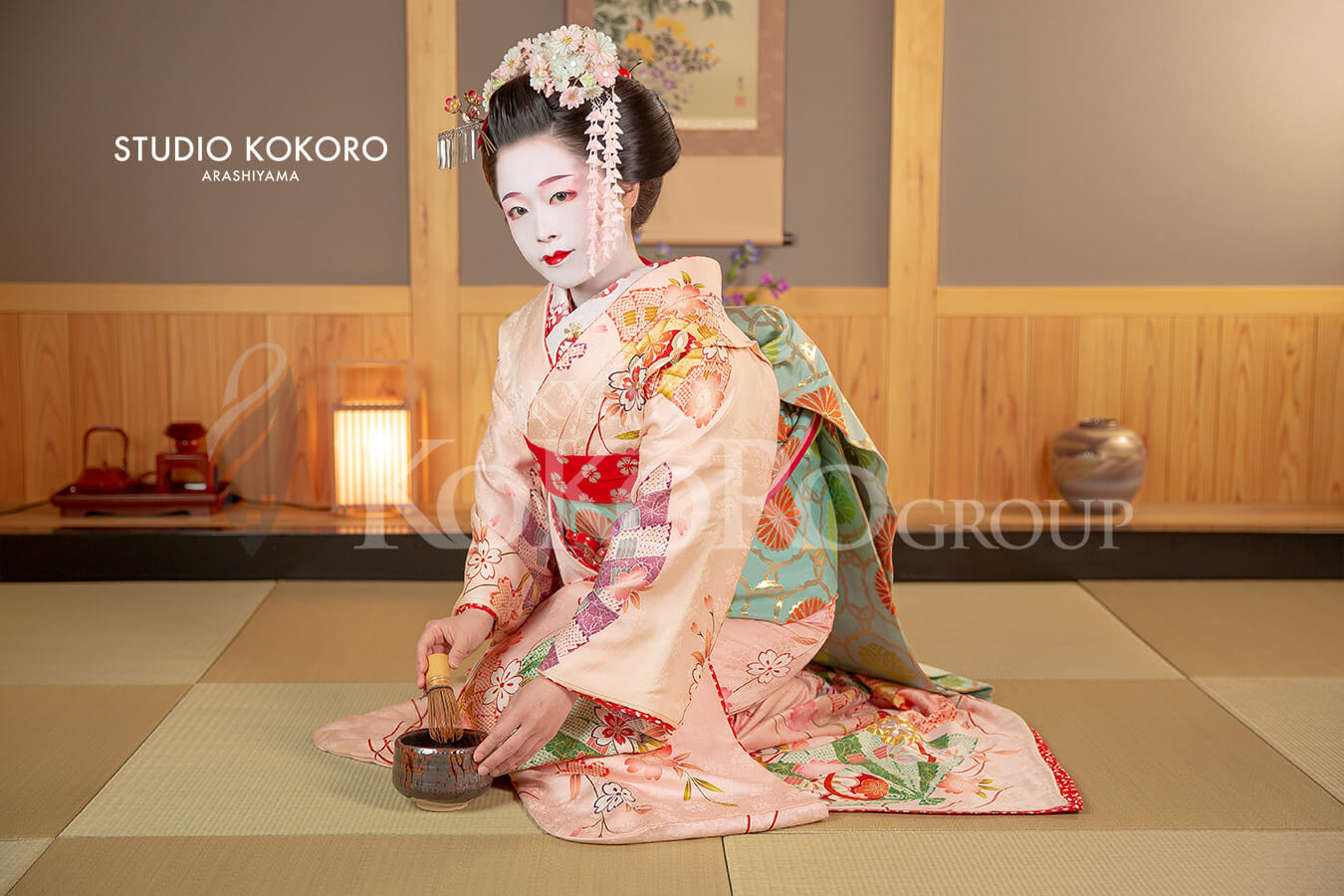
Maiko Makeup: A Step-by-Step Guide
Today, we would like to introduce some interesting facts about Maiko makeup and the process involved.
One of the most important aspects of Maiko makeup is creating a look that expresses cuteness and youthful innocence.
In the Kansai region, the word “obokoi” is often used. It means “adorably innocent” and is typically used to describe young girls or small, cute creatures.
When people think of Maiko makeup, the first thing that usually comes to mind is the white face.
This white makeup originated in the days before electricity, when candles were used for lighting. In dimly lit rooms, the white makeup helped make the face stand out clearly and beautifully. Even today, it remains an essential part of Maiko makeup.
Base Layer: Bintsuke Oil
The base used is bintsuke oil, which is also traditionally used by Maiko and sumo wrestlers to style their hair. It has long been used as a makeup base.
Bintsuke oil is known for its high moisturizing properties, and it is said that this may be one of the reasons Maiko skin appears so smooth and radiant.
The oil is applied not only to the face but also to the neck and nape, where the white makeup will also be applied.
Since the oil is solid at first, it should be warmed in the hands and spread evenly across the palms before applying. This helps it go on smoothly.
If the bintsuke oil is applied unevenly, the white powder applied afterward will also appear uneven, so this step is extremely important and must be done carefully.
White Makeup
After applying the bintsuke oil, the next step is the white makeup.
This white makeup functions like a modern foundation and is the same type used by Kabuki actors.
It is applied with a flat brush called an itabake.
White powder is mixed with water and then spread evenly using a puff.
The makeup is applied to the face, neck, and the nape of the neck.
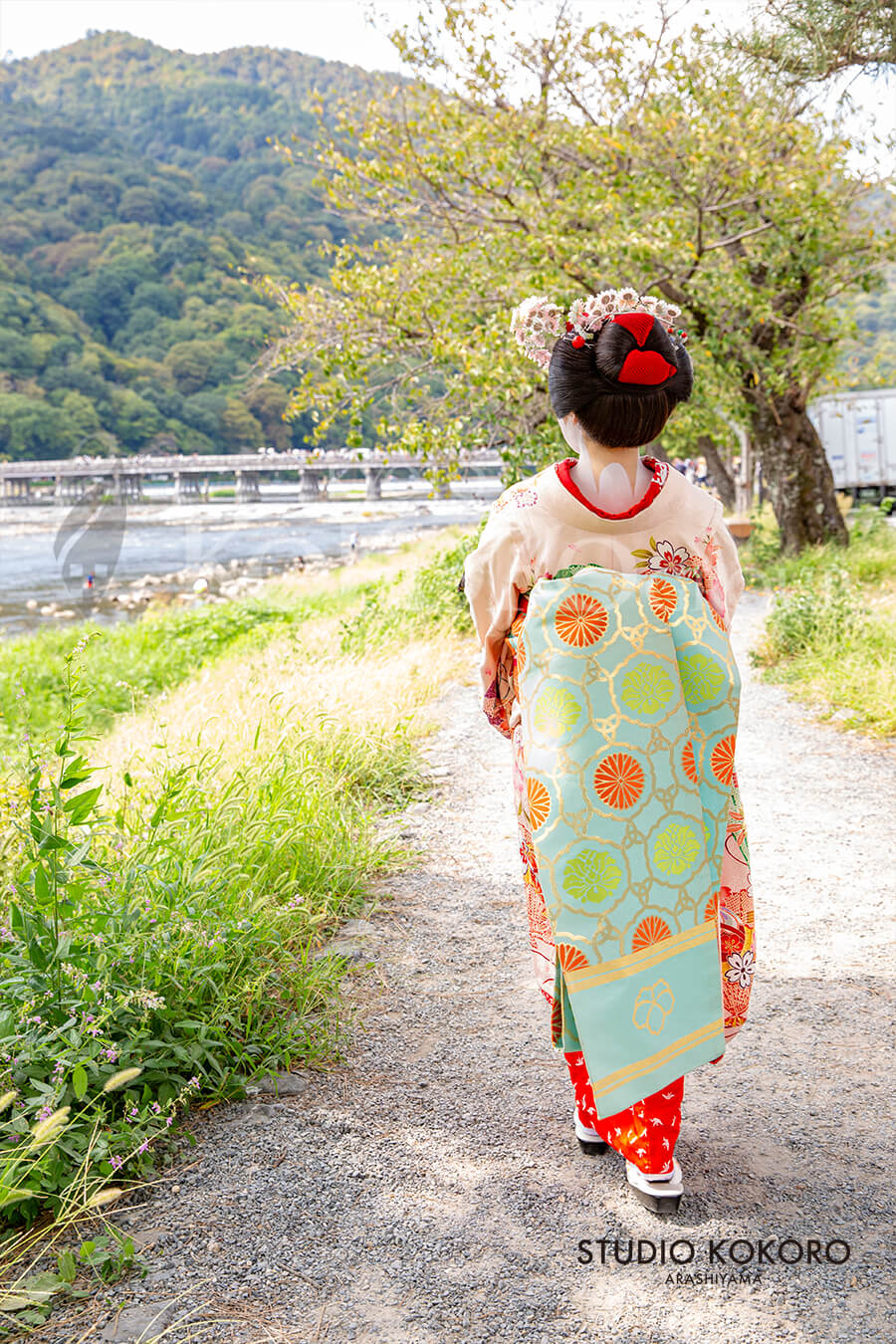
On the nape, which is visible from the kimono collar, special lines called “ashi” (legs) are drawn to make the neck appear longer and more elegant.
Normally, two lines are drawn for regular occasions. During formal events such as New Year’s, when wearing a formal black kimono, three lines are drawn.
In our Maiko experience programs, the standard two-line style is used.
Eye Makeup and Eyebrows
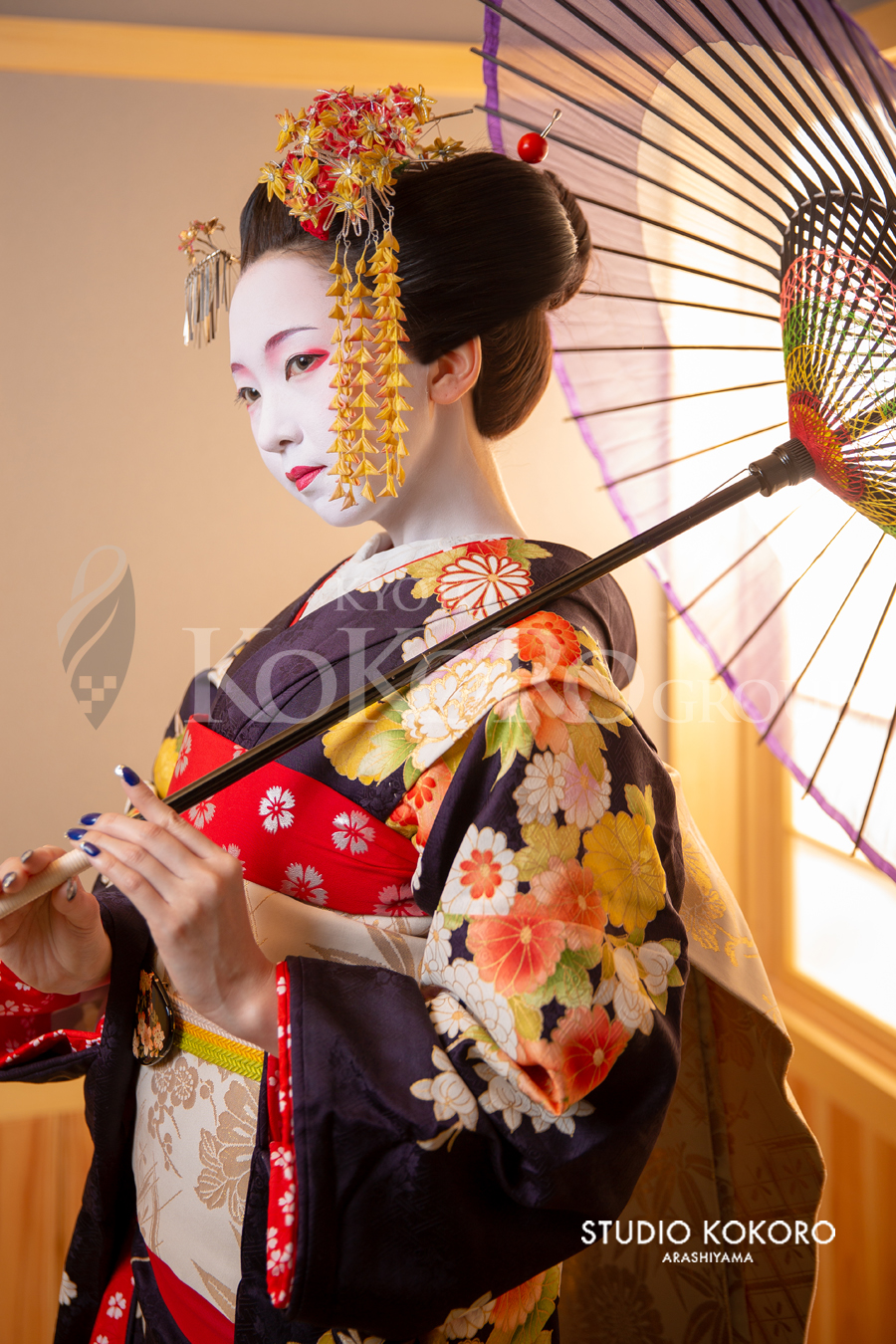
One characteristic of Maiko makeup is the use of red color around the eyes and eyebrows.
Red is applied at the outer corners of the eyes.
This red color is believed to ward off evil spirits. Even though the face is painted white, the red around the eyes represents the color of blood and is said to protect the wearer from misfortune.
Another distinctive feature is the shape of the eyebrows, known as “sasa-mayu” (bamboo-leaf eyebrows). This shape resembles half of a bamboo leaf and is considered the most beautiful style.
Red is also used in the eyebrows.
Some Maiko use only red, while others create a gradient from red to black. The slightly reddish eyebrows blend perfectly with the Maiko makeup.
For eyelashes, they are not curled dramatically; instead, mascara is applied to keep them looking natural.
Lip Color
Finally, the makeup is completed by applying lip color.
During their first year, Maiko apply red color only to the lower lip.
The shape is also drawn slightly smaller than their natural lips.
This style signifies that they are new Maiko and creates the impression of a small, cute mouth, emphasizing youthfulness.
From their second year onward, they are allowed to apply lipstick to both the upper and lower lips.
Final Notes
This is the full process of Maiko makeup.
Maiko perform this entire routine by themselves every day.
Experienced Maiko usually take about 30–40 minutes, while beginners or those who take extra care may spend about an hour on their makeup.
Learning about these details can make a Maiko makeover experience even more enjoyable.
If you are interested, we invite you to try an authentic Maiko experience at least once.
Relatedあわせて読みたい記事