
Maiko Trivia: A Maiko’s Appearance
Today we will introduce some interesting facts about a maiko’s appearance.
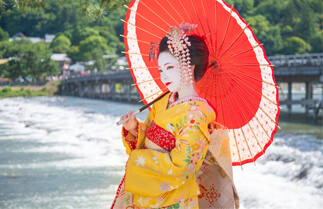
Maiko wear different kinds of kimono depending on the season.
Of course, wearing the same type all year round would be too hot in summer and too cold in winter.
~Kimono and Obi~
A maiko’s kimono and accessories gradually change as she gains more experience.
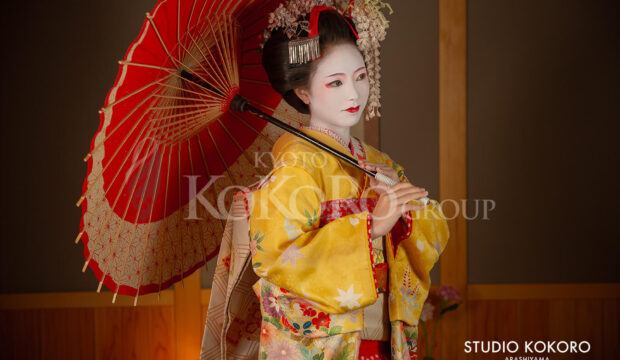
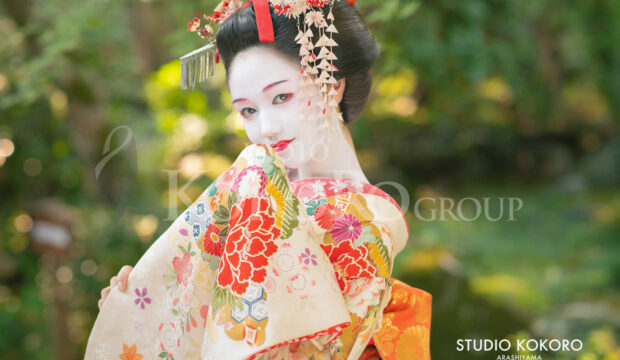
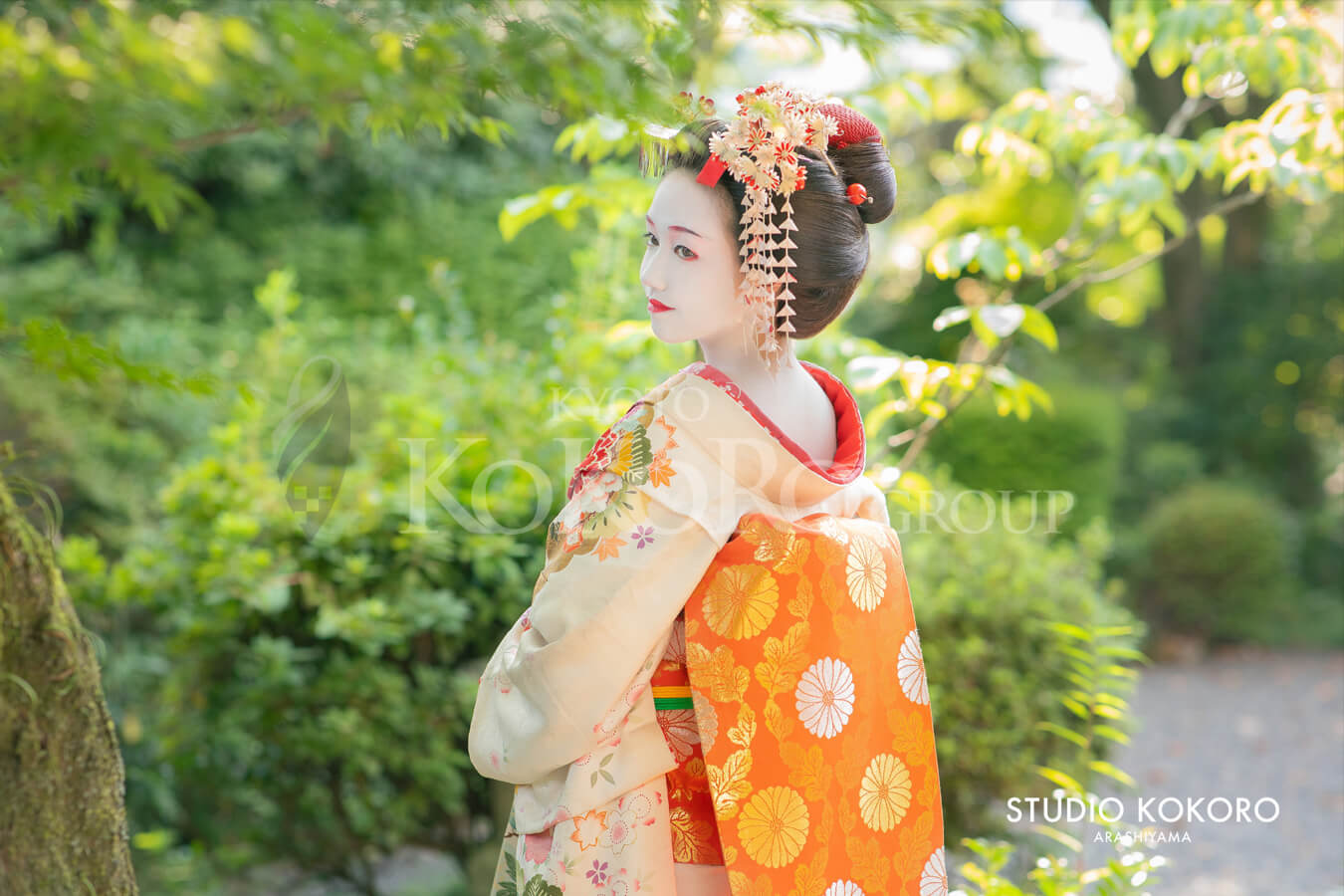
During the first two years, the collar of the kimono is red with gorgeous gold and silver embroidery, and the straps of the okobo (the tall wooden sandals worn by maiko) are also red, giving a very cute and youthful impression.
After this period, the collar becomes white, and the sandal straps change to more subdued colors such as yellow or blue.
In this way, the maiko gradually grows into a more mature woman.
It may be surprising that there are so many different types of kimono.
A maiko’s appearance contains many traditions, cultural meanings, and details that are hard to notice unless you know about them.
If you learn a little about kimono before visiting Kyoto, walking through the hanamachi (geisha districts) may become even more enjoyable.
Not only maiko kimono, but ordinary kimono also have many beautiful patterns. Learning about them can be fascinating and will deepen your appreciation of Japanese culture.
・Kimono
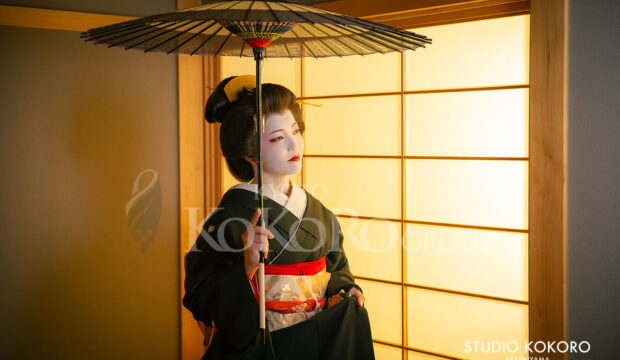
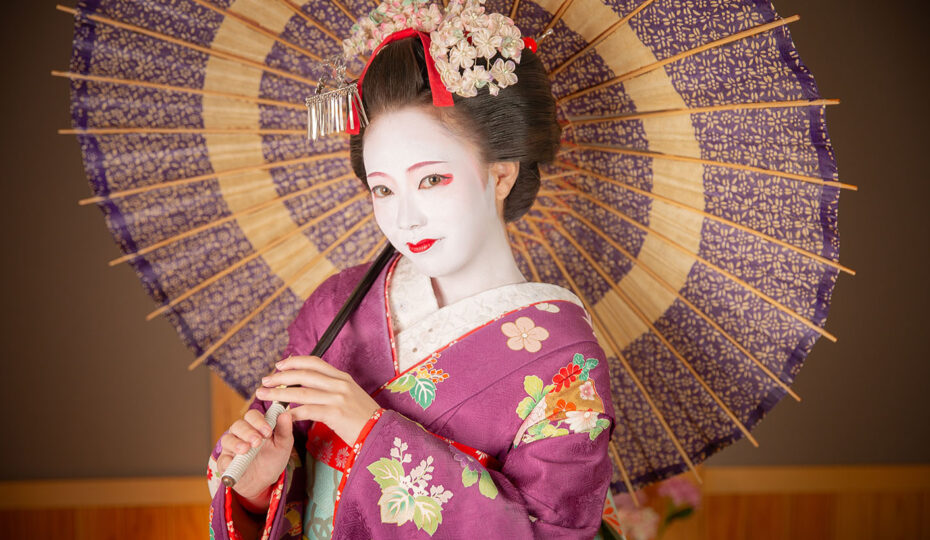
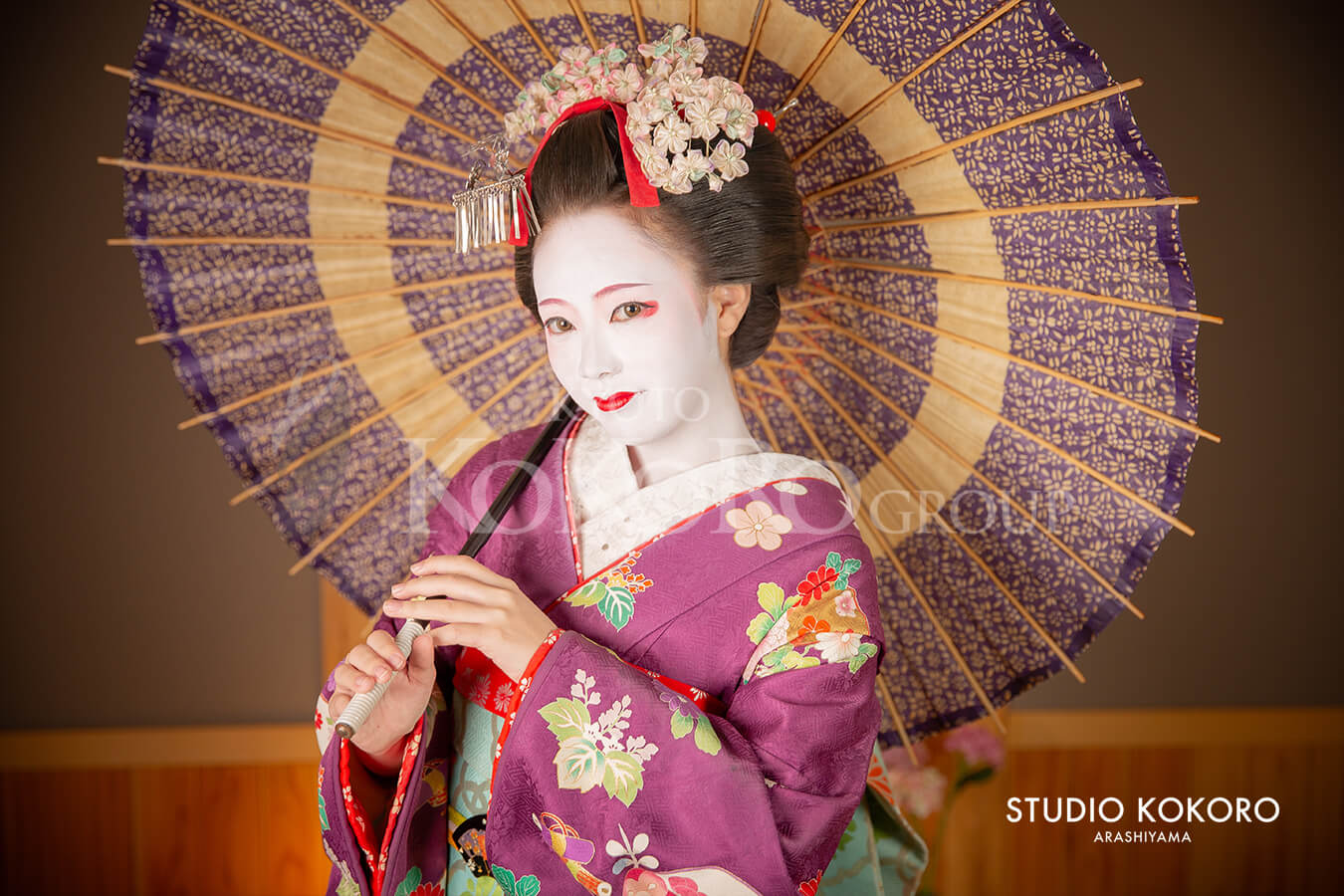
Maiko wear different kimono depending on the season. The black formal kimono called kuro-montsuki is worn during the first three days after a maiko’s debut and during the New Year. During comfortable seasons such as spring and autumn, they wear hitoe, which are single-layer kimono. In slightly chilly months such as April and November, they wear awase kimono with a lining. During the cold winter months from December to March, they wear thicker double-lined kimono, while in the hot summer months of July and August they wear ro kimono made of light and breathable fabric.
During a special event in August called Hassaku, maiko sometimes wear a black formal kimono made of ro fabric. Hassaku takes place on August 1st, and in Kyoto’s hanamachi districts it is known as a day when geiko and maiko visit the people who have supported them to express their gratitude and to ask for their continued support.
Colored formal kimono called iro-montsuki are worn from the fourth day after a maiko’s debut and also during the New Year when the black formal kimono is not worn. The patterns of kimono worn at ozashiki banquets also change with the seasons, often featuring seasonal flowers such as cherry blossoms in spring, wind chimes or willow in summer, chrysanthemums in autumn, and plum blossoms or camellias in winter.
・Obi
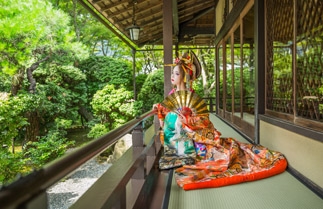
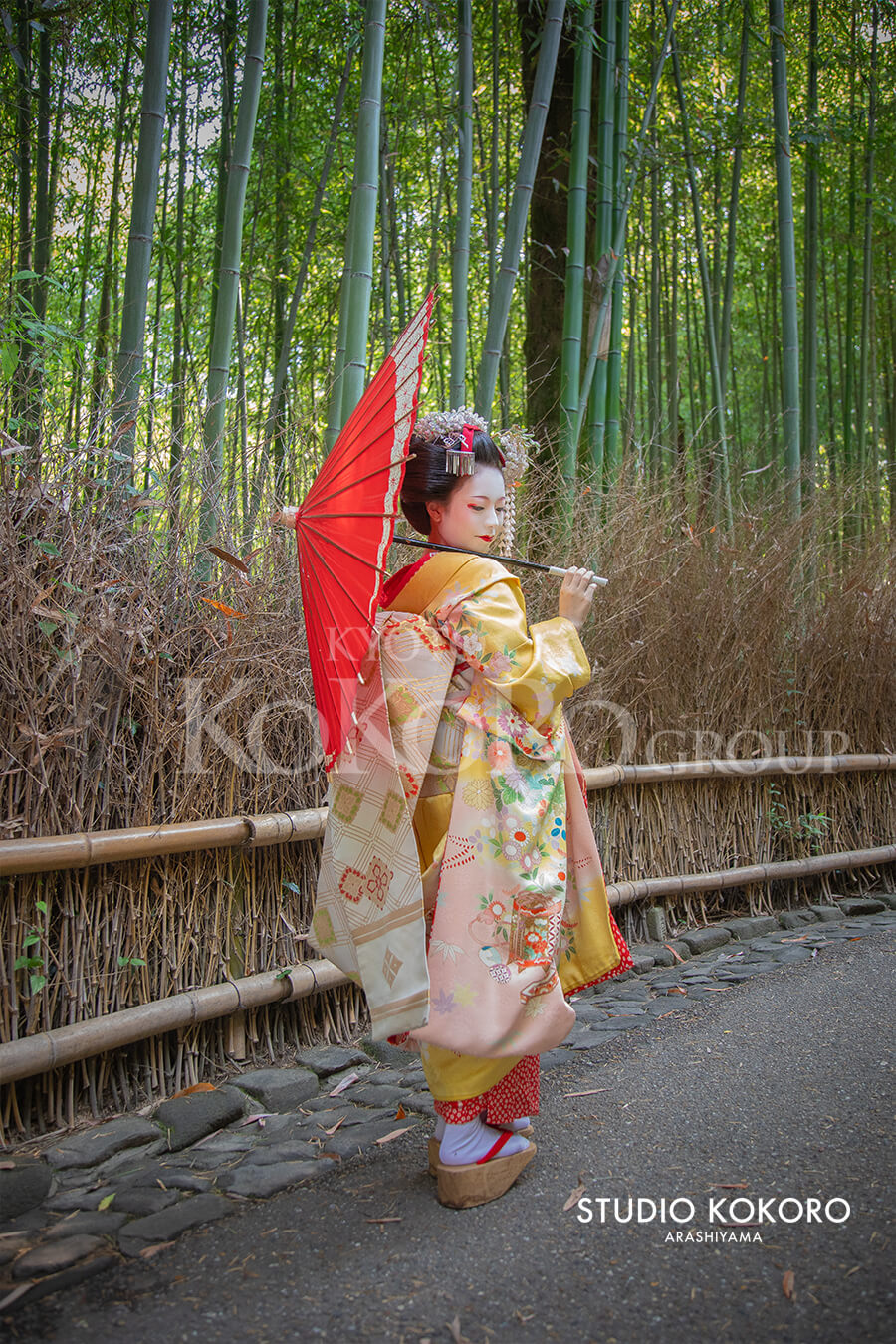
One of the most distinctive features of a maiko is the long darari obi. A maiko’s obi is wider than a typical obi and can be nearly seven meters long. It is called a darari obi because it hangs down gracefully from the back. The obi itself is a maru obi, a very luxurious formal sash decorated with abundant gold and silver thread.
The part of the obi that hangs down often has the crest of the okiya, the house to which the maiko belongs, woven into it. Tying this obi is quite difficult, and the dresser must fasten it very tightly. At first it can feel quite uncomfortable, but once a maiko becomes accustomed to it, a loose obi actually feels strange.
Seasonal obiage and obijime are also chosen to match the time of year. Maiko often wear a large and luxurious ornament called a pocchiri on the obi. These ornaments are passed down through generations within the okiya and are much larger than ordinary obi clasps. They are often made from tortoiseshell or silver and decorated with coral, pearls, or gemstones. Because they are extremely valuable, visitors should avoid touching them. However, pocchiri and obijime are not worn when a maiko is dressed in black montsuki.